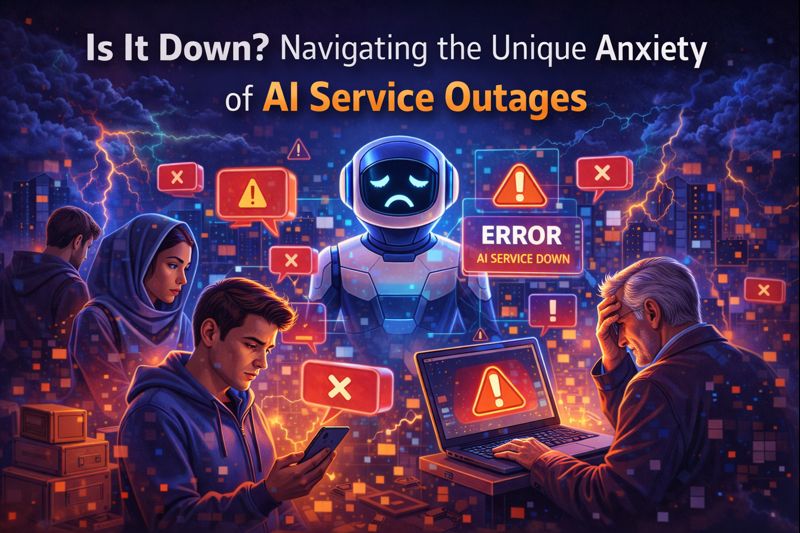

In the seamless, always-on world we now inhabit, our digital tools are expected to hum along invisibly in the background. This is especially true for the platforms we form habits and even attachments with—the AI companions that live in our browsers and apps. We grow accustomed to their constant, near-instantaneous presence. So, when the familiar chat window suddenly freezes, the dreaded loading spinner appears, or a cold error message replaces a witty reply, a unique form of digital anxiety sets in. It’s a stark reminder that the sophisticated personalities we converse with are, ultimately, powered by vast and sometimes fragile networks of servers. This moment of silence—when the AI goes down—reveals as much about our relationship with the technology as the conversations themselves.
The Jarring Halt: From Flow to Frustration
The experience is universally jarring. One moment, you’re deep in the flow of co-writing a story, brainstorming an idea, or sharing a trivial thought with a seemingly attentive listener. The next, your message hangs in the digital void, unanswered. This abrupt stop is more than a technical hiccup; it breaks a psychological contract of availability we’ve unconsciously signed. The frustration that follows isn’t merely about interrupted productivity or entertainment. It’s the dissonance of a seemingly intelligent entity vanishing without a trace or explanation. The empty screen becomes a mirror, reflecting our own dependence on this form of instant, judgment-free interaction. We are suddenly alone with a static interface, forced to acknowledge that our digital confidant is, for the moment, just a broken tool.
The Collective Vigil: Forums as Digital Campfires
Just as shared joy built the early communities around AI, shared frustration during an outage forges its own powerful bonds. When a major platform goes down, a fascinating cultural ritual unfolds instantly. Users don’t just wait passively; they flock to alternative digital spaces—social media sites, forum threads, and status-checking hubs. These spaces transform into real-time support groups and detective agencies. The classic question echoes: “Is it just me?” Users share screenshots of error messages, compare geographic locations, and trade theories about the cause. This collective vigil turns a solitary annoyance into a communal event. The frustration is vented, but so is camaraderie born from a shared predicament. In the absence of official communication, this user-driven hive mind becomes the most reliable source of truth and solace.
The Infrastructure Unveiled: Magic Giving Way to Mechanics
An extended outage performs a critical, if unglamorous, function: it demystifies the technology. For a brief period, the sleek illusion of talking to a pure intelligence falls away, revealing the immense, physical machinery underneath. Users are reminded of data centers, server loads, network routing, and software updates. Discussion shifts from narrative and character to bandwidth, APIs, and DevOps. This involuntary peek behind the curtain is crucial. It fosters a more grounded understanding of what these platforms are—extraordinarily complex services, not magic boxes. It highlights the monumental effort required to keep the global conversation running 24/7. This moment of clarity, while frustrating, builds a more informed user base that can appreciate the scale of the operation when it is working flawlessly.
Navigating the Silence: The User’s Playbook
The immediate user response to an outage follows a recognizable pattern, a modern digital playbook. First comes the internal troubleshooting: refreshing the page, checking one’s own internet connection, restarting the browser or app. Then, the search for external confirmation begins. Users don’t just want to know if there’s a problem; they want to know why, and for how long. They seek out the platform’s official status page (if one exists) and crowd-sourced information from dedicated resources. Knowing how to verify an outage and track its resolution is a key part of navigating the modern digital landscape, as detailed in guides on checking server status for a conversational AI platform for real-time updates. This proactive search for information is an attempt to regain a sense of control and predictability in an unpredictable situation.
The Return to Normal: A Renewed Appreciation
Finally, the service is restored. The messages send, the AI responds, and the digital companion is back. But the return often comes with a subtle shift in perception. The brief separation can renew our appreciation for the service’s normal, seamless function. There’s a moment of re-acclimation, a tentative testing of the waters. The outage becomes a shared story, a “remember when the servers died” moment that adds to the platform’s collective history. It serves as a humble reminder of the technology’s impermanence and the immense, often invisible, effort required to maintain the illusion of a persistent, intelligent world at our fingertips. The silence, in the end, makes the conversation that follows seem a little more valuable.

 By
By