


The cryptocurrency market is always active, and your investment strategy should be too. Modern traders are now using advanced automated systems to get ahead.
These platforms use artificial intelligence to be your constant, data-driven helper. They run algorithmic trading strategies all day, every day. This means no emotional decisions are made.
Automation lets you grab opportunities you might miss. It changes how you deal with digital assets, making your approach more planned and less impulsive.
The main advantage is clear: steady action based on thorough market analysis, not just guesses. This article will dive into how these tools work and their big benefits.
We’ll also give you a guide on picking the best platform. We’ll end with a look at the top options out there. Learning these algorithmic trading strategies is key for any serious trader.
The Rise of Algorithmic Trading: Why AI is a Game-Changer
Trading has changed a lot, from the loud pits to quiet server farms. It moved from manual to electronic trading. Now, we have systems that make millions of trades in seconds.
Crypto markets have been key in this change. Their constant changes and huge data streams are perfect for AI. Early systems were fast but followed strict rules.
AI and machine learning brought a big change. Unlike simple systems, AI gives trading bots a smart brain. They learn from huge amounts of data and find patterns humans miss.
AI’s ability to learn and change is huge. A simple system might sell when prices drop 5%. But AI looks at more, like volume and market mood. It makes smarter choices.
The biggest change is moving from following rules to learning. The bot isn’t just following orders; it’s learning on its own.
Think of it like this. Simple automation is like a train on tracks. It’s good but can’t change. AI is like a self-driving car. It moves on its own, adapting to new things.
This is key for crypto trading. Crypto markets can change fast. An AI bot keeps up with live data. It can adjust to news or big trades quickly. This makes it better at predicting and acting fast.
The table below shows the main differences between old and new ways:
| Feature | Traditional Algorithmic Trading | AI-Enhanced Trading |
|---|---|---|
| Decision Basis | Static, pre-defined rules and indicators | Dynamic models trained on historical & live data |
| Adaptability | Low; needs manual updates for new situations | High; keeps learning and improving strategies |
| Pattern Recognition | Limited to simple, obvious trends | Finds complex, hidden connections |
| Ideal Market | Stable, predictable places | Fast-changing, data-rich areas like crypto |
In short, AI turns a tool into a partner. It deals with endless data, letting traders focus on big ideas. The use of AI in trading was bound to happen. It’s now essential for anyone serious about crypto.
What is an AI Trading Bot for Crypto? Defining the Technology
A crypto AI trading bot is like a never-ending, data-driven manager. It works 24/7, following rules set by its creator. This software makes trades on cryptocurrency exchanges on its own.
It connects to exchanges using secure APIs. This lets it get live market data and make trades without human help.
The bot’s cycle never stops. It looks at lots of data in real-time. This includes prices, volumes, and order books.
It uses smart algorithms to find good trading chances. When it finds one, it buys or sells fast, better than a human could.
A key feature is backtesting trading bots. This lets you test your strategy on past data. It’s a way to see how it would have done before risking real money.
Backtesting is like a practice field. You can tweak settings and see how they work. It helps make your strategy better and more confident.
These bots use different strategies. Each one aims at different market behaviors and risks. Knowing these strategies is the first step to using automation well.
| Strategy | Core Mechanism | Primary Use Case |
|---|---|---|
| Arbitrage | Exploits price differences for the same asset across different exchanges. | Capturing small, low-risk profits from market inefficiencies. |
| Grid Trading | Places a series of buy and sell orders at predefined intervals above and below a set price. | Profiting from market volatility in a ranging (non-trending) market. |
| Dollar-Cost Averaging (DCA) | Automatically invests a fixed sum at regular intervals, regardless of price. | Reducing the impact of volatility and building a long-term position. |
| Market Making | Simultaneously places buy (bid) and sell (ask) orders to profit from the bid-ask spread. | Providing liquidity to the market and earning from spread capture. |
In short, an AI trading bot turns a trader’s plan into steady, emotionless action. It uses real-time data and past tests to work all day. This tech makes watching the market all day unnecessary.
Operational Advantages of Automated AI Trading
AI bots bring a new level of efficiency to crypto trading. They work non-stop and place orders fast. This makes executing strategies consistent and scalable, beyond what a single trader can do.
A big plus is 24/7 market operation. Unlike humans, bots don’t need sleep or breaks. They watch price changes all the time, across different exchanges and time zones. This means no chance of missing an opportunity, whether it’s during a quiet Asian session or a busy US market.
Another key benefit is the elimination of emotional bias. Bots make decisions based on logic and set rules. They don’t feel fear or greed. This means they stick to the plan, avoiding the mistakes humans often make.
Speed and precision are where bots shine. They can quickly analyse a market and make complex orders in milliseconds. This is vital in crypto, where prices can change fast.
Advanced AI market analysis gives bots a big edge. They can quickly process lots of data, from news to social media. This helps them spot patterns and make better trading decisions.
This AI market analysis leads to consistent strategy execution. Once a good rule is found, the bot uses it for thousands of trades. It avoids the human tendency to change plans too much, sticking to a disciplined approach.
| Operational Attribute | AI Trading Bot | Manual Trading |
|---|---|---|
| Market Hours | Operates 24/7/365 without interruption. | Limited by human need for rest, focus, and downtime. |
| Emotional Discipline | Executes trades based solely on logic and pre-defined rules. | Susceptible to fear, greed, fatigue, and other biases. |
| Order Speed & Precision | Millisecond analysis and order placement across multiple exchanges. | Slower reaction time prone to manual entry errors. |
| Strategy Consistency | Follows the programmed strategy without deviation for every single trade. | Prone to inconsistency, hesitation, and emotional overrides. |
| Data Processing Scale | Can analyse terabytes of market and alternative data in real-time. | Limited to monitoring a few charts and data feeds simultaneously. |
In summary, AI trading offers big advantages. It provides constant, unbiased, and fast execution. This helps traders reach further and maintain discipline, leading to better long-term results.
Strategic Benefits of Utilising AI Analysis
Using AI for analysis makes trading smarter, not just faster. It finds opportunities that humans miss. The main benefit is making better decisions, not just acting quicker.
An advanced AI trading bot turns messy market data into a solid plan. This helps in making long-term strategies.
This method also lets you test trading ideas with historical data quickly. You can see how they would have done in the past. This helps in making sure your plans are solid before you start.
AI helps manage your portfolio better. It changes risk levels and asset mix based on market changes. This is more than just setting stop-losses. It’s about adjusting your portfolio to make the most of new trends while keeping your gains safe.
AI also helps find ways to beat the market average. It looks at many things like market mood and order book data. This helps predict price changes and find the best times to buy or sell.
AI makes it easier to spread risk and protect your investments. It finds assets that don’t move together and suggests ways to hedge against losses. This is key for keeping your money safe during uncertain times.
The biggest advantage of a secure trading bot platform is the confidence to follow a proven strategy. This is without being swayed by emotions.
The security of a good platform is a big plus. A secure trading bot platform keeps your money safe from threats. It also keeps your trading strategy sound. This lets you focus on big goals, knowing the basics are taken care of.
Security and Infrastructure: Foundational Features
Choosing an AI trading bot is more than just looking at its strategies. You must also check its security and technical setup. These are key for any automated trading to work well. Without them, even the best grid trading bot can fail.
Good security starts with controlling who can get in. Two-factor authentication (2FA) is a must for your bot account. It adds a strong defence against hackers, keeping your settings and money safe.
When your bot connects to exchanges, security gets even tighter. It uses API keys. A good service will encrypt these connections and let you limit what the bot can do. Always disable withdrawal permissions on any API key given to a trading bot. This stops the bot from taking your money out, even if it’s hacked.
The bot provider’s security is also very important. Good providers get checked by independent auditors and follow strict standards like SOC 2. They keep your data safe by encrypting it. You’re giving them access to your financial info, so they must show they’re trustworthy.
Being cloud-based is a big plus for your bot. It means it doesn’t rely on your computer or internet. It runs on secure servers, so it can trade all the time without stopping. This is key for grid trading, which needs constant watching of the market.
Lastly, your bot must work well with big, trusted exchanges. It should fit perfectly with places like Binance, Coinbase, and Kraken. This gives it access to lots of money, many trading options, and stable performance. If it can’t connect well, a powerful bot is useless.
The table below shows these key features and why they’re important:
| Feature | Description | Why It Matters |
|---|---|---|
| Two-Factor Authentication (2FA) | Requires a second form of verification beyond a password to log in. | Prevents unauthorised account access, protecting your bot settings and linked exchange accounts. |
| API Key Encryption & Permissions | Secure handling of exchange API keys, with withdrawal permissions disabled. | Ensures the bot can trade but cannot withdraw funds, containing the impact of any security incident. |
| Provider Security Protocols | The bot company’s own security measures, such as data encryption and compliance certifications. | Protects your personal and financial data stored on the bot’s platform from external attacks. |
| Cloud-Based Infrastructure | The bot runs on the provider’s servers, not on your local machine. | Guarantees high uptime and reliability, eliminating downtime due to your hardware or internet issues. |
| Exchange Compatibility | Seamless integration with major cryptocurrency exchanges. | Provides access to liquidity, markets, and stable trade execution, which is critical for bot performance. |
These security and infrastructure features are not just a list. They are the foundation for your grid trading bot to work safely and reliably. Taking the time to check these basics is the first and most important step in starting a successful automated trading journey.
Trading and Analytical Capabilities: Performance Features
Success in crypto trading comes from smart strategies like Grid Trading, Arbitrage, and Dollar-Cost Averaging (DCA). These are powered by AI analysis. They turn a simple tool into a powerful trading partner. Let’s look at the key features that affect your trading results.
Grid Trading captures volatility in stable markets. It sets up buy and sell orders at fixed points above and below a price. As prices move, the bot makes trades, making small profits from these changes.
Arbitrage takes advantage of price differences on different exchanges. The AI bot quickly checks many platforms. When it finds a good price gap, it buys and sells at the same time, making a profit without risk.
The Dollar-Cost Averaging (DCA) bot strategy is for the long term. It invests a set amount regularly, no matter the price. This method smooths out the cost over time, reducing the effect of price swings. A good DCA bot strategy helps build a steady position and avoids the risks of investing too much at once.
| Strategy | Core Mechanism | Ideal Market Condition | Primary Goal |
|---|---|---|---|
| Grid Trading | Places limit orders at set intervals to profit from price oscillations within a defined range. | Sideways, ranging markets with consistent volatility. | Generate consistent, small profits from market noise. |
| Arbitrage | Executes simultaneous buy/sell orders on different exchanges to capture price differences. | Markets with low latency and liquidity variations between exchanges. | Secure risk-free profit from temporary market inefficiencies. |
| Dollar-Cost Averaging (DCA) | Automates periodic investments of a fixed amount to average the entry price over time. | All market conditions, particularlly volatile or bearish trends for accumulation. | Lower average cost basis and mitigate timing risk for long-term holdings. |
Analysis is key for strategy development and testing. Advanced platforms offer customisable technical indicators like RSI and MACD. Traders can set bots to follow specific signals, making rules that fit their needs. Also, paper trading or simulation modes let you test strategies without risk.
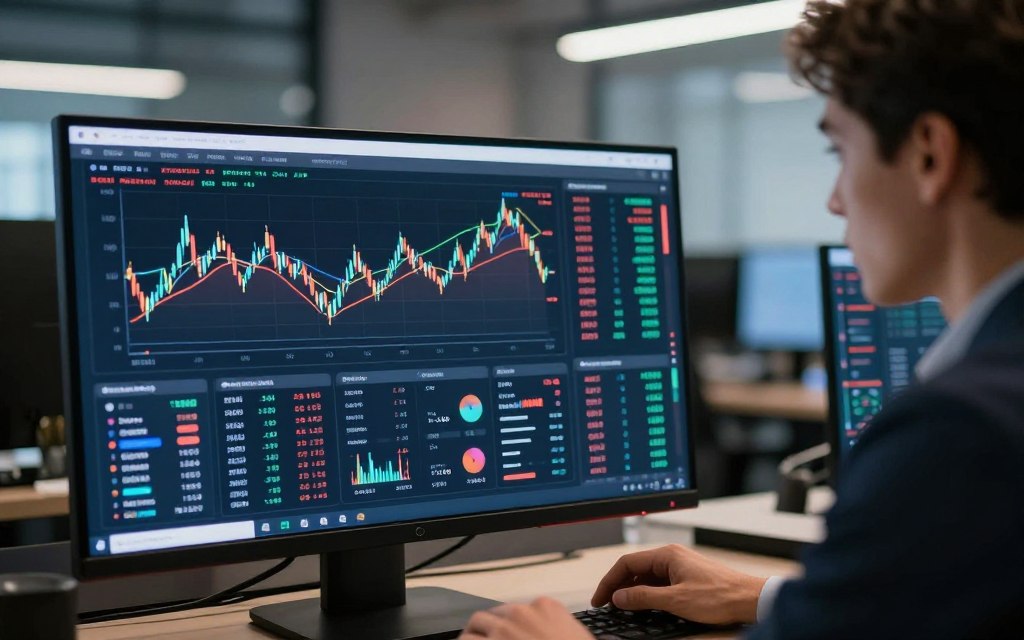
Success is measured with performance dashboards. These show important metrics like ROI, win rate, and total profit/loss for each bot. This feedback helps you see what works and make better choices for the future.
These features are not just a list. They are tools to help you achieve your financial goals. By using them well, you can actively manage the cryptocurrency markets, not just watch them.
Top Contenders: In-Depth Reviews of Leading AI Trading Bots
Choosing the right AI trading bot is all about knowing the good and bad of each top choice. We’ve done in-depth reviews of four leading platforms. This will help you pick the best bot for your trading style and risk level.
3Commas
Overview
3Commas is a full package for trading, both manual and automated. It works with many exchanges and is easy to use for all traders. This 3Commas trading bot review shows it’s great for managing your portfolio and executing complex trades.
Key Features
The SmartTrade terminal is its core feature, allowing for advanced orders. It has popular bots like Dollar-Cost Averaging (DCA) and Grid bots. Plus, there’s a ‘Paper Trading’ feature for testing strategies without risk.
- SmartTrade Terminal for advanced order types.
- DCA & Grid Bots for automated strategies.
- Portfolio management and analytics tools.
- Supports major exchanges like Binance, Coinbase, and KuCoin.
Pros
- Intuitive interface that reduces the learning curve.
- Powerful manual trading tools alongside automation.
- Strong community and extensive educational resources.
Cons
- Premium pricing can be a barrier for small-scale traders.
- Some advanced features require a higher-tier subscription.
- Primarily focused on spot trading, with limited futures support.
Cryptohopper
Overview
Cryptohopper runs your bots 24/7 without needing your computer. It’s known for its social trading and marketplace. An analysis of Cryptohopper AI features shows a focus on customisation and community insights.
Key Features
It has a visual strategy designer for creating bots without coding. The marketplace offers pre-configured ‘signalers’ and strategies. Cryptohopper also includes backtesting and supports trading on multiple exchanges from one dashboard.
- Cloud-based operation for 24/7 uptime.
- Strategy Marketplace for copying expert configurations.
- Visual Strategy Designer for custom bot creation.
- Integrated technical analysis signals and arbitrage scanning.
Pros
- Hands-off operation due to cloud-based architecture.
- Vibrant marketplace fosters strategy sharing and learning.
- Good range of templates for beginners to start quickly.
Cons
- Subscription costs increase significantly with more positions and exchanges.
- The sheer number of marketplace options can be overwhelming for new users.
- Performance heavily relies on the quality of the third-party signals you subscribe to.
Bitsgap
Overview
Bitsgap aims to be an all-in-one trading platform, with bots, portfolio tracking, and arbitrage tools across 25+ exchanges. It’s known for bridging price differences between markets. A balanced look at Bitsgap pros and cons shows it’s great for traders looking for multi-exchange arbitrage and combo bot strategies.
Key Features
Beyond standard Grid and DCA bots, Bitsgap offers a unique COMBO bot that mixes strategies. Its flagship feature is the arbitrage scanner, identifying price discrepancies across connected exchanges. The platform also provides a unified trading terminal for managing all exchange accounts in one place.
- COMBO Bot for multi-strategy automation.
- Real-time arbitrage scanner between exchanges.
- Unified dashboard for multi-exchange portfolio management.
- Demo mode available for practice.
Pros
- Powerful arbitrage tools not commonly found on other bot platforms.
- Clean, professional interface with complete data visualisation.
- Useful for traders active on several different exchanges.
Cons
- Arbitrage opportunities can be fleeting and require very fast execution.
- Higher pricing tiers are needed to access the full suite of bots and features.
- May be overcomplicated for users who only want simple spot trading automation.
Pionex
Overview
Pionex integrates trading bots directly into a licensed cryptocurrency exchange. This unique model means no extra fees for using the bots, just the standard trading fees. This review of Pionex free trading bots highlights its appeal for cost-conscious traders seeking accessible automation.
Key Features
The platform offers 16 free built-in bots, including Grid Trading, DCA, and Rebalancing bots. As an integrated exchange, it simplifies setup—users fund their account and launch bots directly. Pionex also offers leveraged grid bots for those seeking higher risk/reward profiles.
- 16 free, built-in trading bots with no monthly subscription.
- Integrated exchange simplifies setup and fund management.
- Low trading fees (0.05% per side).
- Supports mobile app for on-the-go bot management.
Pros
- Exceptional cost structure with no extra bot subscription fees.
- Extremely user-friendly, making it ideal for automation beginners.
- All bot profits are immediately available in your exchange wallet.
Cons
- Being its own exchange, it requires moving funds away from larger platforms like Binance or Coinbase.
- The selection of tradable assets is more limited compared to major global exchanges.
- Advanced customisation options for bots are less extensive than on dedicated platforms.
How to Choose the Right AI Trading Bot for Your Strategy
Finding the right crypto trading bot is a personal journey. It’s about matching the technology to your unique trading style. This guide will help you make the right choice.
Start by setting your goals. Do you want quick profits or long-term growth? Knowing this helps pick the right bot. Also, think about how much risk you can handle. This is key to managing risks in crypto trading.
With your goals and risk level in mind, here’s what to look for in a bot:
- Exchange Compatibility: Make sure the bot works with your favourite exchanges. Not being able to trade where you want can limit your strategy.
- Total Fee Structure: Don’t just look at the monthly cost. Consider all fees, including trading and withdrawal charges. This will help you understand the bot’s true cost.
- User Interface & Experience: A good bot is easy to use. Choose one with a simple, clear interface, even if you’re new to trading bots.
- Customer Support Quality: Good support is essential. Test how quickly they respond and check their support options. You’ll need help when the market moves.
- Security Credentials: Security is a top priority. Look at the provider’s security record, encryption use, and API key policies. Your money’s safety depends on it.
When looking at fees, be careful. A low monthly fee might be offset by high trading costs. Make a table to compare the total cost of each bot.
The bot’s interface should help you, not confuse you. A good interface shows important info clearly. This helps you keep track and make quick changes.
The best bot for you will fit your trading style and risk management needs. By carefully evaluating, you’ll choose a bot that feels like an extension of yourself. It will automate tasks, letting you focus on strategy.
Getting Started: A Step-by-Step Guide to Setting Up Your First Bot
This guide will help you start your first automated trading strategy safely. It’s easy to follow and helps you understand the technical setup. You’ll learn how to connect your exchange, set up a bot, and start trading confidently.
Remember, starting small and focusing on security is key to successful automated trading. These steps will guide you from the beginning to your first live bot.
First, choose a reputable exchange that works with your AI trading bot platform. Big bots like 3Commas and Cryptohopper work with many large exchanges.
Look at the exchange’s security history, trading fees, and the coins available. Create an account and deposit a small amount to start. This money is for testing, not for real investment.
Step 2: Generate and Secure Your API Keys
API keys connect your exchange to the trading bot. Log into your exchange account and find the API management section.
When creating new keys, use the least privilege principle. Only grant trade permissions, never enable withdrawal rights. This keeps your funds safe even if the bot’s access is compromised.
“The security of an automated trading system is only as strong as its most permissive API key. Trade-only permissions are a non-negotiable first line of defence.”
Step 3: Connect Your Exchange to the Bot Platform
Log into your chosen AI trading bot service. Find the section to add a new exchange or account. You’ll need to enter the API key and secret from Step 2.
The platform will connect, allowing it to read market data and execute trades. But it won’t move funds out. Always check the connection status in both the bot and your exchange account.
Step 4: Choose or Customise a Trading Strategy
Most platforms offer pre-configured strategies. Start with a simple one to understand how it works.
If you customise, start with conservative settings. Use lower trade amounts, wider profit targets, and longer timeframes. This phase is for learning, not making money.
Step 5: Start Small and Use Paper Trading
Before using real money, use the platform’s paper trading or demo mode. This simulates live trading with virtual money, letting you see the strategy’s behaviour without financial risk.
When you go live, start with a small portion of your total crypto capital—perhaps 1-5%. This limits exposure while you verify the bot’s performance in real market conditions.
Step 6: Launch, Monitor, and Establish a Routine
Activate your bot and let it run. But, set and forget is dangerous in automated trading. Set up a monitoring routine: check performance daily at first, then weekly.
Set up price alerts or bot notifications for significant events. Regular reviews help you spot issues, learn from market reactions, and tweak your strategy. This disciplined approach is what separates successful users from those who incur losses.
The table below compares three major exchanges commonly used for bot trading, highlighting key features for automation:
| Exchange | Notable Supported Bots | API Security Features | Trading Fee Structure |
|---|---|---|---|
| Binance | 3Commas, Cryptohopper, Bitsgap, Pionex | Trade-only keys, IP whitelisting, multi-factor authentication | Maker/Taker fees from 0.1%, lower with volume |
| Coinbase Pro | 3Commas, Cryptohopper | Granular permissions, OAuth for some integrations | Maker fees from 0.4%, Taker from 0.6% |
| Kraken | 3Commas, Cryptohopper, Bitsgap | Separate portfolio and staking keys, detailed permission sets | Maker fees from 0.16%, Taker from 0.26% |
Following these steps carefully builds a solid foundation for your automated trading journey. Mastering this setup process is your first step in the future of algorithmic trading. It combines technical skill with prudent risk management, preparing you to scale your operations wisely as you gain experience.
Risk Management: The Non-Negotiable Element of Automated Trading
The most advanced AI trading bot is only as good as its risk management. It handles execution well, but can’t protect your money. This is what makes trading successful and safe.
Always use risk capital—money you can lose without hurting your finances. This rule helps you stay calm and make smart choices.
Every trade must have clear exit points. Stop-loss orders close a trade to limit losses. Take-profit orders lock in gains, stopping you from losing money to greed.
Spreading your money across different assets is key. Don’t put all your eggs in one basket. Use bots with different strategies to reduce risk.
Leverage can increase your gains but also your losses. It’s important to understand the risks before using it. This can lead to big losses if not managed well.

Don’t forget to check on your bot regularly. Markets change, and so should your strategy. Look at trade logs and adjust as needed.
This is vital, even more so during big market changes. Your bot follows rules, but you need to watch over it. Keep an eye on how it’s doing and make changes if needed.
Think of the bot as a tool, not a magic solution. Good risk management is what makes it work. Set limits, use stop-losses, diversify, and know about leverage. This careful approach turns automation into a powerful tool for your financial goals.
The Future of AI in Crypto Trading: Trends to Watch
Artificial intelligence is changing how we trade cryptocurrencies. It’s now using real-time blockchain data. This makes automated cryptocurrency trading smarter, more flexible, and powerful. New trends are shaping the next generation of these tools.
Deeper on-chain analytics are becoming key. Platforms like Nansen are leading the way. Future AI bots will use this data to understand wallet activities and smart contract interactions in real time. This gives them an edge in spotting market trends before they affect prices.
Sentiment analysis is getting more complex. Bots will use advanced Natural Language Processing (NLP) to read news, social media, and forums. They’ll look at context, sarcasm, and source credibility. This makes their decisions more human-like.
The most exciting trend is self-optimising AI agents. These “black-box” systems learn and adapt on their own. They aim to constantly improve their performance without human help. This could lead to a system that always seeks the best results.
The rise of Decentralised Finance (DeFi) brings both challenges and opportunities. Future bots will need to work across different blockchains and liquidity pools. Interoperability will be essential. They might handle yield farming, arbitrage, and complex DeFi positions. This expands automated cryptocurrency trading beyond simple markets.
To see how these technologies come together, explore the role of AI in crypto. The merging of these trends suggests a future where bots are intelligent partners, not just tools.
| Trend | Key Feature | Expected Impact |
|---|---|---|
| On-Chain Analytics | Real-time blockchain data integration | Earlier detection of market moves and whale activity |
| Advanced Sentiment Analysis | NLP on news & social media | Better reaction to market news and FOMO/FUD cycles |
| Autonomous AI Agents | Self-optimising, black-box learning | Strategies that adapt dynamically without manual recalibration |
| DeFi Integration | Cross-chain interoperability & complex strategy execution | Access to new yield sources and decentralised market arbitrage |
The future is clear. We’re moving from simple automation to intelligent market participation. Bots will make more complex decisions with better understanding. Humans might focus on strategy and risk management. The future of automated cryptocurrency trading is about deep market insight, not just speed.
Conclusion
Using an AI trading bot for crypto is a big step forward in trading digital assets. These systems make complex data analysis and repetitive tasks automatic. This gives traders more time and a deeper strategy.
To get the most out of an AI trading bot, you need to choose a reliable platform. Look for platforms like 3Commas or Cryptohopper. Then, set up the bot to match your financial goals and risk level. Lastly, always use good risk management.
Even with automation, human insight is key for lasting success. The crypto market changes a lot, so you need to keep checking and updating your strategy. By using an AI bot and making smart decisions, traders can handle market ups and downs better.
FAQ
What exactly is an AI crypto trading bot?
An AI crypto trading bot is a software that connects to exchanges like Binance or Coinbase. It uses artificial intelligence to analyse market data. This includes price, volume, and order books.
Unlike simple tools, an AI bot can learn from past data. It finds complex patterns and makes trades based on smart strategies. It also has a feature called backtesting, which tests strategies against past data.
How does an AI trading bot remove emotion from trading?
AI trading bots don’t let emotions like fear or greed affect their decisions. They follow their programmed logic and analyse data in real-time. This means they make trades based on facts, not feelings.
So, they stick to their strategy without making impulsive decisions. This helps avoid the mistakes that humans often make.
Can I really make money 24/7 with an AI trading bot?
Yes, AI trading bots can work around the clock. They don’t need breaks or get tired like humans do. This is great for the cryptocurrency market, which is always open.
They can take advantage of opportunities at any time. This means they can make money all day, every day.
What are the most important security features to look for?
Security is very important. Look for strong two-factor authentication (2FA) for your bot account. Also, make sure API keys are encrypted and only allow trading, not withdrawals.
Check the bot provider’s security practices too. They should protect your data and money well.
What is the difference between platforms like 3Commas, Cryptohopper, and Pionex?
These platforms serve different needs. 3Commas is great for experienced traders with its SmartTrade terminal. Cryptohopper has a marketplace for custom strategies. Pionex offers free trading bots within its exchange.
Bitsgap is known for arbitrage and portfolio rebalancing. Choose based on your strategy, budget, and control level.
How do I set up my first AI trading bot?
Setting up a bot involves a few steps. First, create an account on a supported exchange like Kraken. Then, generate secure API keys in the exchange’s settings.
Next, connect those keys to your bot platform (like 3Commas). Choose a strategy or create one, testing it first. Start with a small amount of capital and monitor its performance.
What are the biggest risks involved with automated crypto trading?
The main risks are market risk, technical risk, and user error. A bot can amplify both gains and losses. It’s important to manage risk well.
Use stop-loss orders, only risk capital, and avoid too much leverage. Always keep an eye on your bot’s performance.
How does AI provide a strategic advantage over simple automation?
AI goes beyond simple rules with predictive analytics and adaptive behaviour. It can learn from new data and adjust strategies in real-time. This leads to better portfolio management and finding market inefficiencies.
AI turns raw data into useful insights. It aims to find extra returns.
What future trends will shape AI trading bots?
Future trends include using on-chain analytics and sentiment analysis. There will also be more autonomous AI agents. The growth of DeFi will open up new opportunities for bots.
This could make strategies more complex and flexible. It will also increase interoperability between different systems.


 By
By