

The world of artificial intelligence is changing fast. We’re moving away from tools that only do one thing. The Can Do Anything Now (CDAN) chatbot is leading this change. It’s showing us what machine intelligence can really do.
This tech is more than just a chatbot. It’s a general purpose AI assistant that can help in many ways. It’s made to work with us on lots of tasks.
CDAN is changing how we work. It’s moving us from using many different tools to having one that does it all. It wants to help us be better at our jobs in many areas.
This article looks ahead and dives deep into CDAN’s abilities. We’ll see how it works and what it means for work and business.
Defining the ‘Can Do Anything Now’ Chatbot Phenomenon
To understand the CDAN chatbot, we must see how AI changed. It moved from being a specialist tool to a versatile partner. This section will explain what makes these systems unique, their shift from narrow to broad intelligence, and the role of early digital assistants.
What Exactly is CDAN?
A ‘Can Do Anything Now’ chatbot is a group of advanced AI systems. They use large language models (LLMs) with wide context windows and smart reasoning. Unlike old tools, they can switch between tasks easily.
These systems can write reports, fix code, analyse data, and plan projects in one chat. This is thanks to transformer architecture AI, which makes language processing and generation more coherent.
The Shift from Specialised to General-Purpose AI
For years, AI was great at specific tasks but not much else. A program could play chess or filter spam but not do anything else. The CDAN marks a big change towards AI that can do many things.
These systems use one model for many tasks. They go from following rules to making guesses and solving problems. This change shows how artificial intelligence is becoming more important in our lives, moving from simple tools to active helpers.
A Brief History of Evolving Digital Assistants
The journey to CDAN started with simple programs like ELIZA in the 1960s. The 2000s brought the first voice assistants, but they were limited to set commands.
The big step was the development of neural networks and the transformer model. This led to LLMs that could understand subtleties and keep context. Today’s CDAN assistants are the result of this progress—multi-modal, adaptable, and learning from interaction.
This history of transformer architecture AI shows how the “can do anything” dream became real.
Under the Hood: The Technology Powering CDAN
The move from talking to doing is thanks to advanced tech. A ‘Can Do Anything Now’ chatbot needs strong tech to go from chat to action. This includes design, data, and processing power.
Foundations in Advanced Language Models
At the heart of CDAN is a large language model (LLM). This neural network is trained on a huge amount of digital text and code. It lets the chatbot understand and create human language, making it the main way we talk to it.
Transformer Architecture and Scalable Attention
The transformer architecture is key to modern LLMs. Its scalable attention mechanism lets the model focus on each word against all others at once. This parallel work helps it grasp context, nuance, and long-range connections in prompts. It’s what makes AI task automation sophisticated.
The Role of Multimodal Training Data
Versatility comes from diverse training data. Early models were trained on text alone. But today’s systems learn from multimodal datasets. These include text, code, math, and images. This wide range of data helps the AI understand concepts better, important for tasks that need logic, structure, and visual thinking.
Real-Time Processing and Expanding Context
For an assistant to act quickly, it must process and respond fast. Advances in tech and special hardware make this possible. Also, handling expanding context windows—from long conversations or documents—is key. It keeps the chatbot coherent and remembers earlier instructions, vital for complex tasks.
Mechanisms for Continuous Learning and Refinement
Even though the model is static after training, CDAN systems can get better. Through reinforcement learning from human feedback (RLHF) and fine-tuning, the model’s responses can match human preferences. This feedback loop helps the system improve over time, making it more helpful and reliable.
| Technology Pillar | Key Function | Impact on AI Task Automation |
|---|---|---|
| Transformer Architecture | Processes language sequences in parallel using attention mechanisms to understand context. | Enables comprehension of complex, nuanced user instructions for accurate task initiation. |
| Multimodal Training | Exposes the model to diverse data types (text, code, images) during pre-training. | Builds a versatile understanding that can be applied to varied tasks, from writing to coding to design brainstorming. |
| Long-Context Inference | Manages and references extensive conversational history and document content. | Maintains coherence in extended workflows, allowing for the execution of multi-stage projects without losing track. |
| Feedback-Driven Tuning | Uses human feedback and interaction data to adjust and improve output quality. | Enhances the reliability, safety, and usefulness of automated actions over time. |
These technologies work together to make a language model more than just a conversational tool. They turn it into a powerful, active assistant ready to handle many digital tasks.
The Can Do Anything Now Chatbot: Unpacking Its Core Capabilities
The CDAN chatbot does more than just chat. It has advanced language skills, can control workflows, and solve complex problems. It can understand what you need, plan a solution, and carry it out across different apps. This section explains what makes this system so powerful.
Sophisticated Natural Language Understanding
The chatbot can understand human language deeply. It’s not just about matching keywords. It can grasp sentence structure, context, and even the tone behind your words.
This advanced understanding lets it handle complex instructions. For example, it can draft a polite email, suggest alternative meeting times, and check attachments for conflicts. This skill is key for AI content generation and task execution.
Dynamic Task Automation and Workflow Management
Once it understands your goal, the chatbot starts to manage tasks. It breaks down big goals into smaller, doable steps. It also handles dependencies and works across different digital spaces.
For instance, it might gather data, send emails for missing inputs, create a document, and schedule a meeting. This is like how collaborative software helps manage group work.
The system is flexible and can change its plan as needed. It adapts to new information or changing priorities, making it a quick and effective digital manager.
Logical Reasoning and Multi-Step Problem-Solving
The chatbot’s most impressive feature is its ability to reason logically. It explains its thought process, making it easy to follow. This skill helps it tackle hypothetical scenarios and solve problems without a clear solution.
For example, if website traffic drops, it can figure out the cause and suggest a plan to fix it. It might check for updates, site speed issues, or broken links. This makes it a strategic partner in decision-making.
This framework turns the chatbot from a simple info retriever into a strategic advisor. It guides complex decision-making processes.
| Core Capability | Primary Function | User Benefit Example |
|---|---|---|
| Natural Language Understanding | Interprets intent, nuance, and complex instructions | Accurately follows a verbose, multi-faceted request |
| Dynamic Task Automation | Breaks down goals, manages sequences, executes across platforms | Autonomously coordinates a multi-step project from start to finish |
| Logical Reasoning | Applies chain-of-thought analysis to novel problems | Provides a reasoned diagnostic and action plan for an unexpected issue |
These three abilities make the Can Do Anything Now assistant truly powerful. It can understand and solve complex tasks, setting the stage for its use in creativity, analysis, and productivity.
Creative and Content Generation Prowess
For writers, designers, and musicians, the CDAN chatbot is a never-ending source of ideas. It can come up with original concepts and drafts in many different media. This makes it more than just a tool for data processing; it’s a partner in creating art and ideas.
Writing, Editing, and Rewriting Across Genres
The chatbot is great at working with words. It can create, improve, and change text to fit any style or audience. This shows its strength in language and versatility.
Long-Form Articles, Reports, and Technical Documentation
CDAN is excellent at organizing complex information. It can write detailed reports, articles, and technical guides. It ensures everything is clear and consistent, helping professionals communicate well.
Creative Writing, Scripts, and Poetic Composition
The AI understands stories and styles well. It can build character arcs, write dialogue, and create poetry. It helps writers improve their ideas and overcome creative blocks.

Brainstorming Visual and Design Concepts
Even though it can’t create images, CDAN is great for ideas. It can describe visual briefs, suggest colours, and outline logo concepts. It gives designers a solid base to work from.
Creativity is allowing yourself to make mistakes. Art is knowing which ones to keep.
Generating Ideas for Music and Audio Projects
The model’s wide training lets it explore sound. It can suggest themes, song structures, and even write lyrics. It’s a great source of inspiration for composers and audio engineers.
| Medium | Example Output | Primary Utility |
|---|---|---|
| Textual | Market analysis report, sonnet, software tutorial | Drafting, editing, stylistic adaptation |
| Visual Concept | Website mood board description, character backstory | Ideation, brief creation, thematic development |
| Audio Project | Song theme ideas, podcast segment outline | Creative brainstorming, structural planning |
In short, the CDAN chatbot boosts creativity. It doesn’t replace human creativity but adds to it. It’s a key tool for content generation and AI code generation, making it a complete digital partner.
Technical and Analytical Mastery
For developers, data scientists, and engineers, the CDAN chatbot is a game-changer. It goes beyond simple chat to deliver real results in complex tasks. It turns hard problems into easy solutions, boosting productivity and stressing the need for human checks.
Code Generation, Explanation, and Debugging
CDAN works as a team with developers, creating code from simple descriptions. It’s not just about writing code; it explains it too, helping with learning and reviews. If there’s an error, it offers smart ways to fix it.
Support for a Wide Array of Programming Languages
It’s not just for one language. CDAN supports many programming languages, from common ones like JavaScript and Python to less known ones like Rust or SQL. This makes it a valuable tool in many software development settings.
Data Analysis, Interpretation, and Visualisation
CDAN is great with data, understanding structures and suggesting how to clean and process it. It turns data into stories, using charts and graphs to share findings. This is super useful for analyzing text data, spotting patterns and themes.
Executing Complex Mathematical Modelling
The chatbot is also skilled in advanced math. It helps set up complex models, explains the math, and guides through steps. It’s a collaborative partner for tasks like financial forecasting, engineering, or scientific research, speeding up the process and improving analysis.
Enhancing Productivity and Personal Organisation
A general-purpose AI assistant can change your workflow for the better. It turns messy tasks into organised steps. For you, a CDAN chatbot is like a personal AI research assistant for your schedule and commitments.
Intelligent Scheduling and Calendar Optimisation
CDAN does more than just remind you of meetings. It looks at your meeting patterns and finds the best times for you. It even writes polite emails to schedule meetings.
It learns when you need to focus and when you should work together. This helps it block your calendar wisely.
Email Drafting, Summarisation, and Intelligent Triage
CDAN helps you deal with too much email. It writes smart responses, summarises long emails, and sorts your inbox. It flags urgent emails and puts less important ones aside.
This gives you awareness support in team work.
Project Planning, Delegation, and Progress Tracking
For big projects, CDAN breaks down big goals into smaller tasks. It suggests who should do what and tracks how you’re doing. It combines updates from different places, giving you a clear view of your project.
This is like having a dedicated AI research assistant keeping track of your project.
| Task Area | Traditional Approach | CDAN-Enhanced Approach | Key Benefit |
|---|---|---|---|
| Scheduling | Manual back-and-forth emails, calendar checks for conflicts. | AI proposes optimal times, auto-drafts invites, and blocks focus time. | Saves hours per week; reduces scheduling friction. |
| Email Management | Reading every email, manually prioritising, writing individual replies. | Inbox summarisation, intelligent triage, and context-aware draft generation. | Dramatically cuts down information overload and response time. |
| Project Tracking | Status meetings, manual update collation in spreadsheets or tools. | Automated progress synthesis, milestone alerts, and delegation analysis. | Provides real-time awareness and reduces project management overhead. |
These features work together to make your work easier. The chatbot takes care of the boring stuff. This lets you focus on important decisions and creative work.
Research, Synthesis, and Advanced Knowledge Work
For professionals and learners, the CDAN chatbot is more than an assistant. It becomes a dynamic research partner, speeding up the learning process. It’s great at understanding complex information and breaking it down into useful insights.
Rapid Information Retrieval and Coherent Summarisation
Dealing with lots of documents or online searches can be overwhelming. A CDAN chatbot helps by quickly sorting through texts, papers, or datasets. It finds the most important points and trends.
It’s not just about being fast. The AI also makes sense of it all. It creates clear summaries and reviews that link different ideas together. This saves a lot of time that would be spent reading and taking notes.
Comparative Analysis and Detailed Report Writing
These chatbots do more than just summarise. They can compare different theories, products, or datasets. This helps make informed decisions.
They then put their findings into detailed reports. They can write executive summaries, methodology sections, and conclusions based on data. This skill is key for enterprise AI integration, where clear reports are vital.
Personalised Tutoring and Skill Development
The chatbot also acts as a personalised tutor. It adjusts its teaching to fit different learning styles. Whether you like detailed explanations or step-by-step guides, it can adapt.
For example, someone learning to cook gets more than just recipes. They get explanations of techniques, alternative ingredients, and the science behind cooking. This makes learning advanced knowledge work and skills accessible to everyone. It’s a powerful tool for upskilling in organisations and enterprise AI integration strategies.
Integration and Application in Real-World Scenarios
Using a ‘Can Do Anything Now’ chatbot needs careful thought. It must fit well into our daily lives and work places. This makes it useful and valuable.
Business and Enterprise Implementations
In business, CDAN boosts efficiency. It goes beyond simple tasks to manage work across teams and data. This is called an ‘Enterprise Orchestration Layer’, using many agents to handle complex tasks.
Transforming Customer Service Operations
CDAN chatbots offer 24/7 support, answering simple questions and troubleshooting. They can handle complex talks but need human check on important issues. This is because they’re not always 100% accurate.
“The next wave of enterprise software won’t be about a single AI doing a task, but multiple specialised agents working in concert across an organisation’s entire workflow.”
Streamlining Internal Knowledge Management
Companies have lots of documents and data. CDAN makes this information easy to search. It answers complex questions, saving time but needs strong security.
Revolutionising Educational and Research Methodologies
In schools, chatbots act as personal tutors. They create lessons and quizzes for students. For researchers, they speed up reviews and summaries, helping draft papers.
Personal Use for Lifestyle and Daily Management
At home, CDAN helps with planning and finance. It can plan trips, manage money, and suggest meals. It makes life easier by doing routine tasks.
The table below shows where CDAN is used and its benefits:
| Application Domain | Primary Use Case | Key Benefit | Implementation Note |
|---|---|---|---|
| Business & Enterprise | Customer Service & Knowledge Management | Operational efficiency & informed decision-making | Requires integration with legacy systems and data security frameworks. |
| Education & Research | Personalised Tutoring & Literature Synthesis | Accelerated learning and discovery | Best used to complement, not replace, expert educator guidance. |
| Personal Lifestyle | Trip Planning, Finance, & Daily Admin | Time savings and reduced cognitive load | Effectiveness depends on the user’s willingness to delegate personal tasks. |
CDAN works well when we know its strengths and limits. This knowledge helps it work better with us, showing its true value.
Understanding the Limits: What CDAN Cannot Do
AI systems are not as all-powerful as some stories make them out to be. They have their limits, even though they can do a lot. Knowing these limits is important for using them safely and effectively.
The Fundamental Boundaries of AI Understanding
A CDAN chatbot doesn’t have real thoughts or feelings. It works by looking at patterns in language, not understanding the meaning. It can seem to care and make sense, but it doesn’t really have feelings or experiences.
This means it can’t make up its own mind, judge right from wrong, or get the subtleties of human communication. Its smartness is mainly about pattern matching.
Issues of Reliability, Hallucination, and Necessary Verification
One big problem is when AI makes up information that sounds real but isn’t. This isn’t because it’s trying to trick us, but because it’s trying to make sense of things.
For important tasks like medical advice or legal analysis, you need a human to check the AI’s work. This is because AI’s answers can have serious consequences, and we need to be sure they’re right.
“The cost of being wrong in a physical or high-stakes domain changes everything. You move from a world of ‘maybe it’s right’ to a world of ‘you must be sure.'”
Ethical Constraints and the Imperative of Human Oversight
These systems can carry over biases from their training data. They also raise big privacy questions about how they handle user information. So, tasks that involve personal or financial details need a human-in-the-loop approach.
At the end of the day, a person must be accountable. The chatbot is great for ideas and suggestions, but it can’t take full responsibility. This is a key rule, not just a temporary glitch.
| Task Domain | Primary AI Risk | Reason for Human Oversight |
|---|---|---|
| Medical or Legal Advice | Hallucination of facts; lack of licensure | Potential for severe real-world harm; legal accountability. |
| Financial Forecasting & Investment | Overconfidence in modelled predictions | Market volatility and unquantifiable human factors. |
| Content Moderation & Ethical Decisions | Embedded societal bias; lack of moral reasoning | Nuance, cultural context, and ethical judgement are required. |
| Original Academic Research | Plagiarism or misrepresentation of sources | Upholding academic integrity and verifying source accuracy. |
It’s vital to understand these limits to shape the right future of AI assistants. Their best use is as tools to help humans, not as standalone decision-makers.
The Future Trajectory of ‘Can Do Anything Now’ Assistants
The evolution of CDAN technology is changing. It will move from being standalone tools to connected systems. These systems will think, talk, act, and coordinate in the physical world.
Towards Truly Seamless Multimodal Interaction
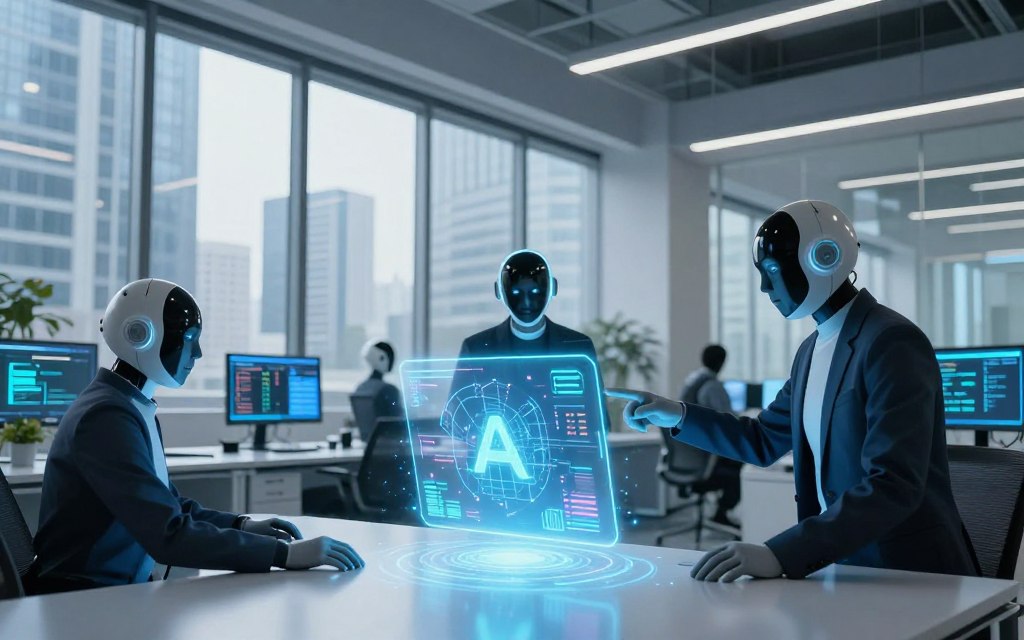
The next step is combining voice, sight, and action. Future assistants will understand visual scenes and control smart machines. This is what Physical AI is all about.
Imagine a chatbot that sees problems with a drone and fixes them. This mix of modalities will make interactions feel natural and powerful.
Advanced Personalisation and Persistent Memory
Assistants will soon remember your preferences and past projects for years. They will understand your goals and adapt to you.
This makes your assistant a true partner. It will suggest opportunities, remind you of tasks, and talk to you in your own way. It’s no longer just a tool but a helpful friend.
Broader Societal and Economic Implications
This advanced AI agent coordination will change work and society. The “orchestration layer” idea means AIs will work together on big projects. A central CDAN assistant will manage them.
This change will automate complex tasks. It will create new jobs in AI management but also replace some.
The economic effects will be huge. It could make things more efficient but also need a lot of investment in training and ethics. We must think about privacy, accountability, and making sure these systems help everyone.
Conclusion
The ‘Can Do Anything Now’ chatbot is a big step forward in artificial intelligence. These tools help humans in many areas, like writing and research. They also make our daily tasks easier.
But, there are challenges. These chatbots can make mistakes and don’t always understand things right. We need to check their work carefully. They should help us, not replace us.
Seeing CDAN as a big step helps us look forward. We’re moving towards better teamwork between humans and machines.
Future advancements will make these tools even more useful. They will understand text, images, and sounds better. This will make them more helpful and personal.
The goal is for AI and humans to work together well. AI will handle the hard stuff, so we can focus on being creative and innovative.
FAQ
What exactly is a ‘Can Do Anything Now’ (CDAN) chatbot?
A CDAN chatbot is a new type of advanced artificial intelligence. It uses large language models (LLMs) like GPT-4. Unlike old chatbots, a CDAN system can do many things.
It can write, code, and plan. It even understands context and can reason. This makes it a powerful tool for helping humans.
How does CDAN technology differ from older digital assistants like Siri or rule-based chatbots?
CDAN systems are a big step forward. Old assistants like Siri or rule-based chatbots work in simple ways. They don’t understand complex language well.
CDAN chatbots, on the other hand, can handle complex language and conversations. They can also reason and solve problems in new ways. This makes them much more versatile than old chatbots.
What are the core capabilities that enable a CDAN chatbot to be so versatile?
CDAN chatbots are versatile because of three main abilities. First, they understand language well. They can follow complex instructions.
Second, they can automate tasks. They break down big goals into smaller steps. This helps them manage work better.
Third, they can solve problems in a logical way. They can think through challenges and make decisions. This is similar to how a human would work.
Can a CDAN chatbot truly be creative?
Yes, CDAN chatbots can be creative in their own way. They can write articles, reports, and even poetry. They can also come up with new ideas for designs and music.
But, they shouldn’t replace human creativity. Instead, they can help by generating ideas and drafting content. They can also help overcome creative blocks by using the data they’ve been trained on.
How reliable is a CDAN assistant for technical tasks like coding or data analysis?
CDAN chatbots are great for technical tasks. They can write code, explain it, and even debug it. They can also suggest ways to visualise data.
But, their work is not always perfect. They can make mistakes or produce inefficient code. This is because their output is based on probabilities. So, it’s always important to check their work, even for simple tasks.
What are the main limitations and risks associated with using a CDAN system?
CDAN systems have some big limitations. They don’t truly understand things like humans do. They can also make up information confidently, which is known as confabulation.
They might also have biases from the data they were trained on. This means they need careful use and oversight. They should be used to help humans, not replace them. Always check their work to ensure it’s correct.
How might CDAN technology evolve in the future?
The future of CDAN technology looks exciting. We can expect them to interact in new ways, like using voice, vision, and action. They will also remember more about us, making them even more helpful.
They will work together with other AI systems on big projects. This will change how we work and live. It will also raise important questions about ethics and jobs.

 By
By